
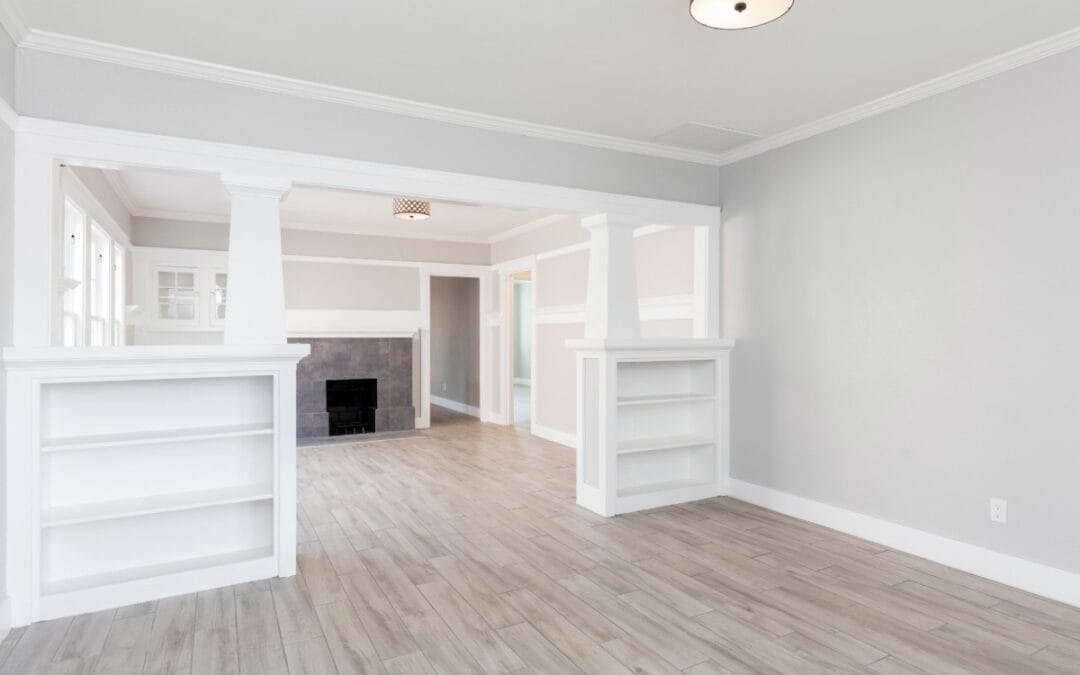
The real estate industry has always relied on presentation to attract buyers, but artificial intelligence is revolutionizing how properties are showcased. AI-powered virtual staging has emerged as a game-changing tool that transforms empty spaces into beautifully furnished homes in seconds, fundamentally reshaping real estate marketing strategies.
The Evolution of Virtual Home Staging
Traditional property staging involves physically furnishing a home with rental furniture and décor, a process that can cost between $2,000 and $10,000 and take several weeks to complete. Virtual staging offers a modern alternative, digitally enhancing property photos to showcase a space’s potential. With AI integration, this process has become exponentially faster, more affordable, and more realistic than ever before. At EnDesign, we’ve witnessed firsthand how this technology is transforming the way real estate professionals market their properties.
AI-powered virtual home staging platforms utilize advanced machine learning algorithms and computer vision to analyze room dimensions, lighting conditions, and architectural features. These systems can then generate photorealistic furniture and décor that seamlessly integrates with the original space, complete with accurate shadows, reflections, and perspective. The result is marketing imagery that helps buyers visualize themselves living in the property, even when viewing listings from their smartphones.
Speed and Efficiency That Transforms Workflows
One of the most significant advantages of AI in virtual staging is the dramatic reduction in turnaround time. While traditional physical staging can take weeks to arrange, and traditional virtual staging services may require 24 to 48 hours, AI-powered solutions deliver professionally staged images in as little as 30 seconds to a few minutes. This speed allows real estate agents to list properties faster and maintain momentum in competitive markets where timing is everything.
The efficiency extends beyond just speed. AI virtual staging eliminates the logistical challenges of coordinating furniture delivery, storage, and removal. Agents can instantly test multiple design styles, from modern minimalist to traditional luxury, without any physical labour or additional cost. This flexibility enables them to tailor presentations to specific buyer demographics or adjust strategies in real time based on market feedback.
Cost-Effectiveness Without Compromising Quality
The financial benefits of AI virtual staging are substantial. Traditional physical staging costs can quickly escalate, especially for vacant homes that remain on the market for extended periods, as staging companies often charge ongoing rental fees. AI virtual staging platforms typically operate on subscription models or per-image pricing, with costs ranging from $0.17 to around $24 per image. This represents a cost reduction of more than 90% compared to traditional methods.
Despite the lower price point, modern AI systems produce remarkably realistic results. Advanced platforms are trained on vast datasets of interior design images, enabling them to understand proper furniture placement, maintain architectural proportions, and generate lighting effects that match the original photograph. The technology has evolved to the point where AI-staged images are often indistinguishable from photographs of physically staged homes.
Expanding Creative Possibilities
Beyond basic room staging, AI technology enables creative applications that were previously impractical or impossible. Real estate professionals can now showcase a single room in multiple configurations, demonstrating versatility to appeal to diverse buyer preferences. A spare room might be presented as both a home office for remote workers and a nursery for growing families, maximizing the property’s appeal across different market segments.
AI tools also extend to property enhancement beyond furniture placement. Features like day-to-dusk conversion transform daytime photos into dramatic twilight shots that have been shown to increase listing views. AI-powered image enhancement can improve photo quality, adjust lighting, and even modify cosmetic elements such as wall colours or flooring materials, helping buyers envision renovation possibilities without requiring any changes to the property.
The Future of Real Estate Marketing
As AI technology continues to advance, virtual staging capabilities are expanding to include immersive experiences such as 360-degree virtual tours and integration with 3D floor plans. These tools create comprehensive digital presentations that allow buyers to explore properties from every angle, making online listings increasingly sophisticated and engaging.
The integration of AI into virtual staging represents more than just a cost-saving measure—it’s a fundamental shift in how properties are marketed and sold. By combining speed, affordability, flexibility, and stunning visual quality, AI-powered virtual home staging has become an essential tool for modern real estate professionals looking to stand out in an increasingly digital marketplace. As EnDesign continues to explore innovative visualization solutions, we recognize that AI virtual staging is not just a trend but the new standard in real estate visualization, and it will only become more sophisticated as technology continues to evolve.